

Article Outline
- Current status of the Asia-Pacific meeting room market
- Estimation of the Taiwan conference room equipment market size
- Growth momentum of conference room automation systems
- The Taiwan meeting room market has astonishing potential.
- Taiwan Conference Room Equipment Market Trends
According to Omdia's research and analysis, the total number of meeting rooms worldwide has reached 43.85 million, of whichThe Asia-Pacific region accounts for as much as 41%, or approximately 18 million units.This also confirms Asian enterprises' high reliance on and demand for meeting collaboration.
Current status of meeting room systems in the Asia-Pacific region
Looking further at the data for the Asia-Pacific region, there are significant differences in the penetration rates and application methods of meeting room equipment:
- BYOD meeting roomPercentage 11%(approximately 2 million), representing the usage scenario where users bring laptops or mobile devices to connect to conference room systems.
- Dedicated video conference room(such as Microsoft Teams Rooms or Zoom Rooms): accounts for only 2%(approximately 410,000), indicating that the market still has plenty of room for growth.
- Meeting rooms without deployed VC or BYOD equipmentGundam 81%(approximately 15.6 million), most meeting rooms are still in a basic state and have not yet undergone comprehensive meeting room equipment planning.
Estimation of the Taiwan conference room equipment market size
If Taiwan accounts for about the global population 0.29% Based on this baseline, the overall market size is approximately 127,000 meeting rooms.
This estimate covers both IPO and pre-IPO companies, government agencies, and educational institutions, representing a reasonable and conservative inference.
The market distribution in Taiwan is as follows:
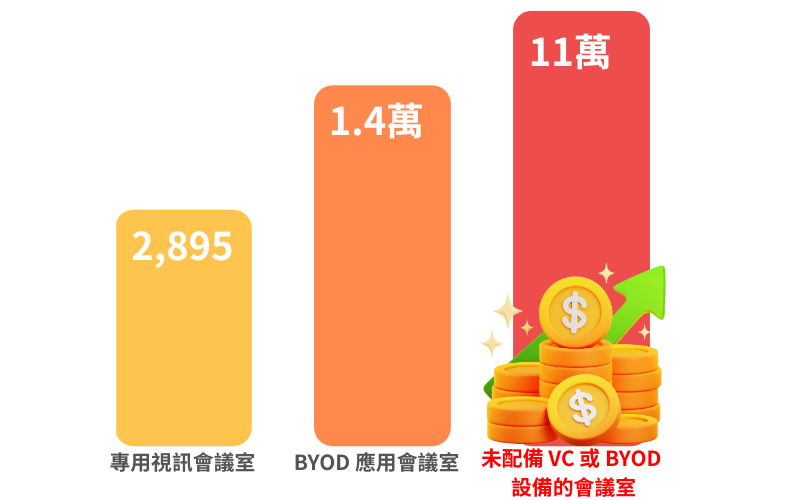
- BYOD meeting room: Approx. 14,000 units
- Dedicated video conference room: Approx. 2,895
- Meeting rooms without deployed VC or BYOD equipment: Approx. 110,000 houses
This indicates that there is still significant demand in Taiwan for upgrading conference room equipment, particularly in the areas of conference room automation systems and professional conference room equipment planning.
Growth momentum of conference room automation systems
As hybrid work and remote collaboration become the norm, the demand for meeting room systems is no longer just about simple audio-visual hardware, but is shifting toward:
- Intelligent management
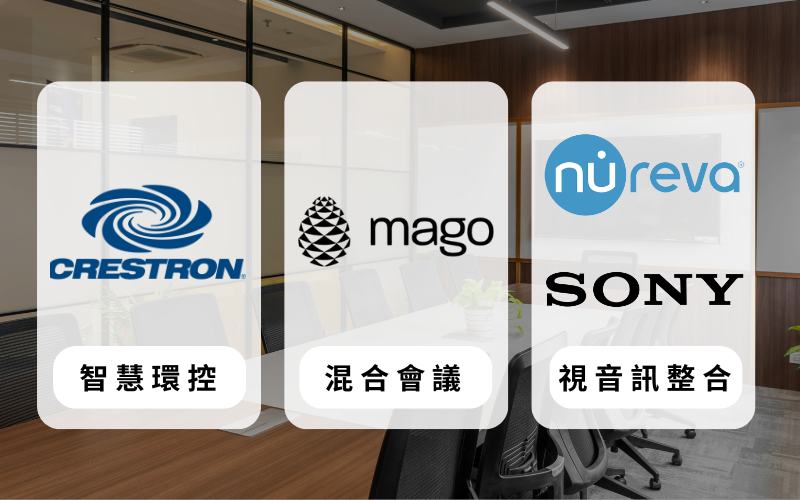
- 以 Crestron control system For example, it can automatically manage the lighting, air conditioning, projection, and audiovisual equipment in the conference room. Users can activate the entire meeting space with a single click, enhancing operational convenience and meeting efficiency.
- Highly Integrated Solutions
- Margo Hybrid Meeting Infinite ProjectionSupports wireless connection across multiple devices, allowing remote and on-site participants to synchronously share presentations or materials, seamlessly integrating with cloud meeting platforms (such as Microsoft Teams and Zoom) to provide a professional and smooth meeting experience.
- Scalable equipment planning
- Nureva audio integration system It can capture the sound of the entire meeting room and integrate with the video system to ensure that both online and offline participants can clearly hear every speaker.
- SONY smart video equipment Provides AI auto-tracking and camera framing functions that can be flexibly adjusted according to meeting room size and usage requirements, supporting everything from small huddle rooms to versatile large conference rooms, thereby avoiding resource waste and enhancing the overall user experience.
After integrating the above products and systems, enterprises can build a intelligent, scalable, and highly integrated meeting room ecosystem, which not only enhances meeting efficiency, but also provides strong support for future hybrid working models and remote collaboration.
The market potential for meeting room integration in Taiwan is astonishing.
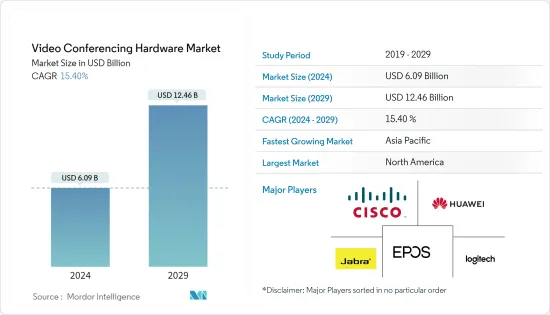
According to the latest GII report, globally Video Conferencing Hardware Market valued at approximately in 2024 $6.09 billion, projected to grow to 2029 $12.46 billion, with a compound annual growth rate (CAGR) of about 15.40%.GII This significant growth is primarily driven by the widespread adoption of hybrid work models, as well as an increasing demand from more enterprises, educational institutions, and commercial spaces for efficient, reliable, and highly integrated conference hardware equipment.
What is even more noteworthy is that, solely Between 2020 and 2025, Crestron has accumulated installations of over 2,100 Microsoft Teams Rooms and Zoom Rooms in Taiwan.This figure not only confirms the conservatism of Omdia's research findings, but also demonstrates Taiwanese enterprises' actual willingness to invest in high-end conference room equipment and automation systems.
Taiwan Conference Room Equipment Market Trends
Taiwan has 127,000 meeting rooms the huge base of, among which More than 86% have not yet implemented comprehensive conference room equipment or automation systemsThis means that the coming years will be a crucial battleground for manufacturers, distributors, and system integrators.
As hybrid work and AI-driven collaboration mature, Taiwan’s conference room equipment market is moving toward smart, integrated, and cloud-based solutions. The trends for the next three years can be summarized as follows:
1. Smart Conference Rooms and Environmental Control Automation
Companies are not only looking to implement video conferencing, but also hope to improve efficiency through automated environmental control.Crestron The solution enhances meeting efficiency and space utilization through one-click meeting mode activation, automated scheduling, and occupancy detection. It reduces energy consumption and operational costs by automatically controlling lighting and air conditioning, while supporting remote management and monitoring. A unified platform management enables enterprises to track meeting room usage and equipment status.
2. High-Performance Audio and Noise-Cancellation Technology
Sound quality remains a key factor affecting the collaboration experience.Nureva Enhance audio coverage during meetings with Microphone Mist technology,HP Poly,EPOS,Axtel (Non-Chinese-made headphones) Provide a variety of noise-canceling conference headset options.
3. AI-driven smart video
Conference room cameras are evolving from traditional imaging to automatic framing and AI-powered face tracking.Sony,HP Poly,Lifesize,Vidyo Brands such as [Brand Name] will continue to launch smart video conferencing devices designed specifically for hybrid meetings, providing participants with a more natural interactive experience.
4. Wireless Projection and Multi-Screen Interaction
With the rise in BYOD (Bring Your Own Device) and multi-screen sharing needs,ScreenBeam,NorthVision,Samsung Solutions such as wireless projection and commercial display systems will become standard features, helping to get meetings up and running quickly and reduce connectivity issues.
5. Cloud-Based Conferencing Platforms and Integration Solutions
Businesses are gradually shifting from standalone hardware to integrated solutions.Magician,Pexip Provides cross-platform collaboration via a meeting platform;Oracle,Proxmox Provides backend data management and virtualization support;Sangoma,Audiocodes This will strengthen the instant messaging and voice infrastructure and ensure the security and stability of the system.
Conclusion: Overall Solution and Service Model
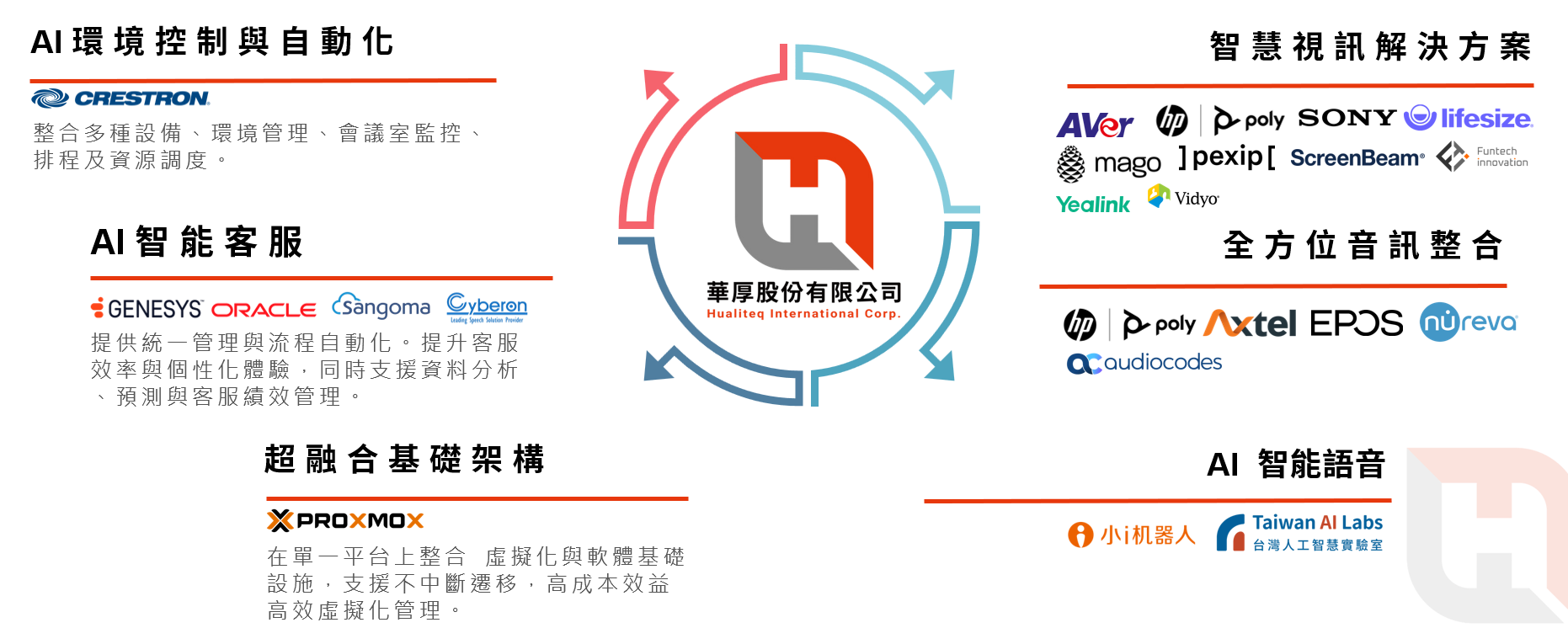
The future conference room market will focus on “end-to-end solutions”—complete integration ranging from hardware and software to cloud-based collaboration. Capable of simultaneously providingSmart environmental control, AI video, professional audio, and secure virtualization platform Such solutions will become a top priority for companies’ standardized procurement.
Choose Huahou for hardware deployment and software planning. With over 40 years of proven success in the field and a professional team well-versed in hardware and software integration, we have the capability to complete planning and implementation from the ground up. Combined with state-of-the-art equipment, we create the most comprehensive smart environment.
We help you streamline previously cumbersome processes—whether in executive conference rooms, multipurpose spaces, school classrooms, or other settings—by taking you through a process that starts with an analysis of your current setup, followed by hardware and software technical support, and culminating in professional deployment to upgrade your existing environment!
Sources: Omdia, GII
 繁體中文
繁體中文  English